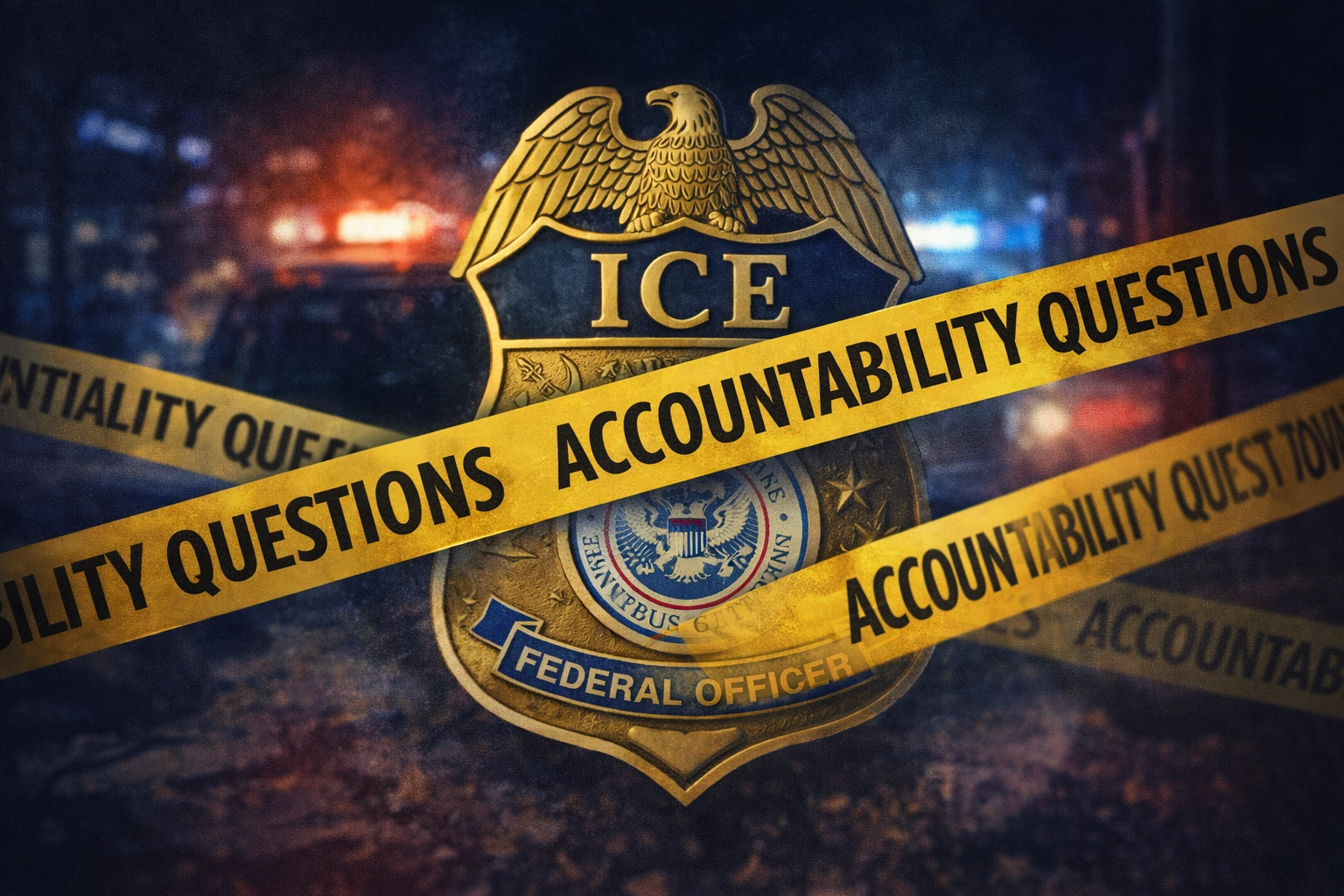
Receipt issued: U.S. Immigration and Customs Enforcement (ICE) is tasked with public safety and enforcement. In Minneapolis on January 7, 2026, an ICE agent fatally shot a woman in her vehicle. Conflicting narratives, limited transparency, and investigative control by federal agencies highlight a gap between stated responsibilities and outcomes.
What ICE Is Supposed to Do
U.S. Immigration and Customs Enforcement is a federal law enforcement agency responsible for immigration enforcement and public safety. Its mandate includes arresting individuals who pose a risk to public safety or national security, while adhering to use-of-force policies comparable to other federal law enforcement entities. ICE agents swear to protect the public and enforce laws within constitutional boundaries.
The Minneapolis Shooting Incident
On January 7, 2026, in Minneapolis, Minnesota, ICE agents engaged a vehicle driven by Renee Nicole Good. Law enforcement agencies reported that the female driver failed to comply with commands and allegedly attempted to use her vehicle as a weapon. An ICE agent discharged a firearm, fatally striking Ms. Good. She was not a subject of known ICE targeted arrest and was reportedly driving near the scene of an unrelated federal operation.
Local authorities and community leaders quickly disputed key parts of the federal narrative. Minneapolis officials, including the city’s mayor, stated publicly that Ms. Good did not appear to pose an imminent threat that justified lethal force. Video footage circulating on social media and released by locals showed elements of the encounter that differed from initial federal descriptions, intensifying public scrutiny.
Conflicting Narratives and Transparency Gaps
Immediately following the shooting, federal agencies, including the Department of Homeland Security (DHS) and ICE, issued statements asserting that the use of force was justified under their interpretation of the circumstances. These statements referenced noncompliance and perceived threats without full context. Local leaders and state investigators challenged these assertions and called for an independent inquiry.
Within days, the Federal Bureau of Investigation (FBI) assumed investigative control of the case. The state’s designated investigative body was sidelined, limiting independent access by local authorities. The details of the evidence, including body camera footage and communications, have not been fully released to the public, with ongoing federal control cited as a basis for limited disclosure. As of this writing, no criminal charges have been publicly filed against the ICE agent involved.
What the Record Shows
The available record consists of:
- Official federal statements emphasizing justification of force
- Publicly released portions of video that appear to contradict key narrative elements
- Local leadership statements challenging the federal portrayal
- Transfer of investigative control to a federal agency with restricted access
These elements reflect a record in which narrative framing, access to evidence, and accountability mechanisms remain limited.
Why This Accountability Gap Matters
Two primary issues arise from this incident’s handling:
- Use of Force Standards: Federal law enforcement agencies are expected to apply clear and consistent standards that prevent unnecessary loss of life. When narratives diverge and evidence is withheld or controlled, public trust erodes.
- Investigative Transparency: When a federal agency retains sole oversight of an investigation involving an agent’s use of lethal force, local stakeholders and the public have reduced capacity to understand the full context and assess whether policies were followed correctly.
These concerns are not unique to this incident; they reflect broader debates over federal jurisdiction, use-of-force accountability, and public access to investigative records.
What to Watch Next
In evaluating this incident as a Late Receipt:
- Stay alert for the release of body camera footage or investigative documents that clarify the sequence of events.
- Monitor whether federal agencies adopt consistent transparency practices in similar future cases.
- Review any official policy changes or training updates related to ICE’s use of force.
The presence or absence of these outcomes will deepen understanding of institutional responsibility versus rhetoric.
Record Status
The public narrative presented by federal authorities emphasized justification and threat perception. Available evidence, conflicting accounts, and restricted access to investigative materials show that a complete and transparent record has not been delivered. Until evidence is fully accessible and accountability mechanisms are confirmed, the claim of appropriate enforcement remains partially unanswered.