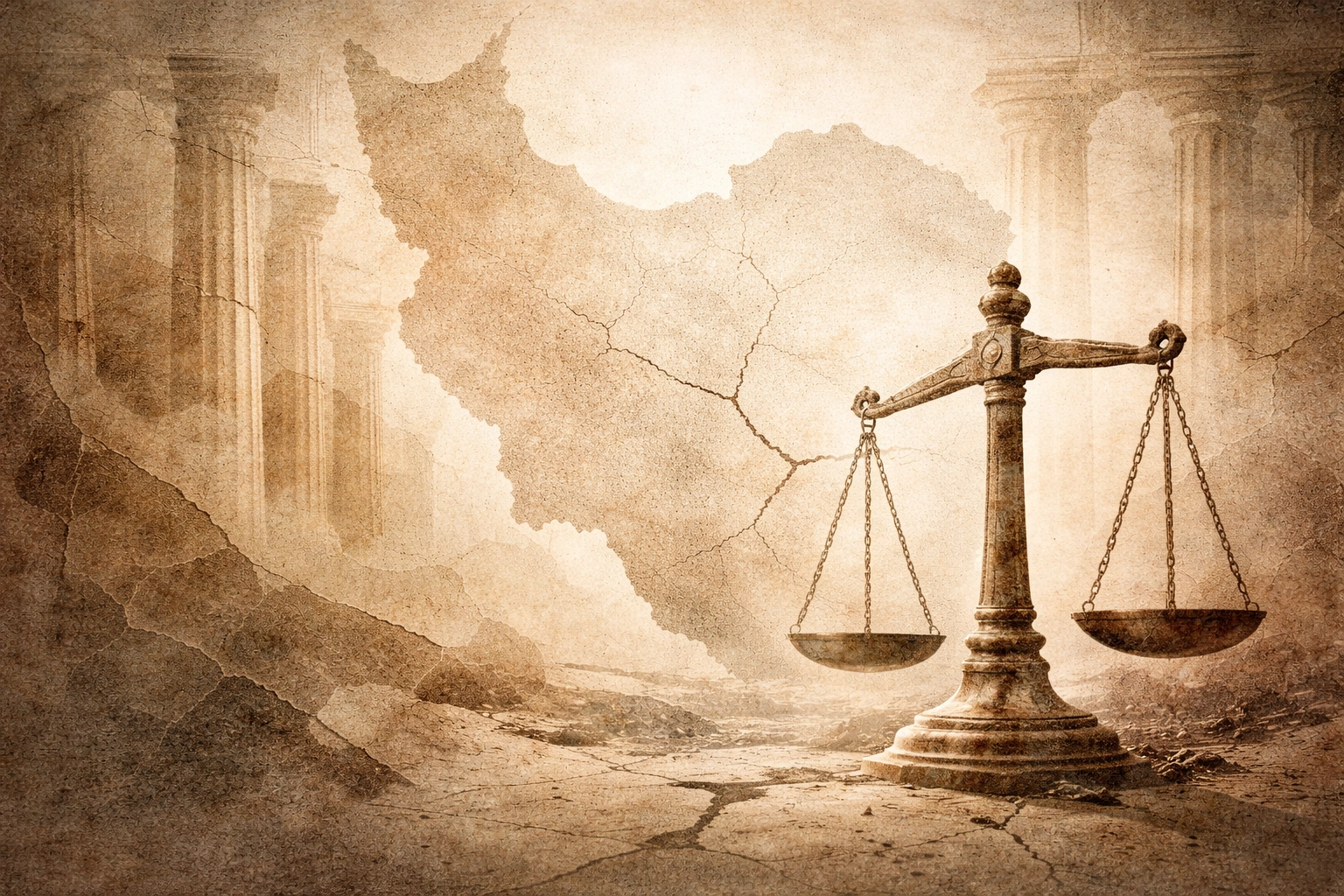
This article documents what was promised during the revolution, what followed in practice, and why parts of Iranian society continue to reassess the system that replaced the Shah.
The Promise
Revolutionary leaders and movements in 1978–1979 framed the overthrow of the Shah as a moral and political reset. Public messaging consistently emphasized several core commitments:
- Justice in governance and law
- An end to corruption and elite privilege
- Political freedom and popular sovereignty
- Economic fairness and improved living standards
- Independence from foreign influence
The revolution was presented not simply as a change in leadership, but as a transformation intended to restore legitimacy, dignity, and accountability to the state.
What Replaced the Shah
Following the Shah’s departure and the 1979 referendum, Iran became an Islamic Republic. Power was reorganized into a system combining elected institutions with clerical oversight. Ultimate authority was vested in the Supreme Leader, while parallel bodies such as the Islamic Revolutionary Guard Corps emerged as influential political and economic actors.
In the early post-revolutionary period, rival factions were sidelined, opposition parties were restricted, and political power consolidated rapidly within the new system.
The Record Since 1979
Over the decades that followed, Iran’s post-revolutionary record included persistent internal and external challenges:
- Restrictions on political opposition and press freedom
- Recurring protest movements met with state force
- Economic volatility, inflation, and unemployment
- Large-scale emigration, particularly among educated professionals
- International isolation shaped by sanctions and geopolitical conflict
Supporters of the system cite national independence and regional influence as achievements. Critics point to unmet promises related to freedom, accountability, and economic stability.
Public Sentiment Over Time
Public sentiment in Iran has evolved across generations. While the early years of the Islamic Republic saw significant support, disillusionment grew over time, particularly among those born after 1979.
Repeated protest movements—triggered by economic conditions, political grievances, and social restrictions—have reflected dissatisfaction with governance rather than adherence to a single alternative vision.
Why the Past Is Being Revisited
In recent years, parts of Iranian society have revisited the pre-1979 period as a point of comparison. Monarchist symbolism, references to the former royal family, and public statements by Crown Prince Reza Pahlavi have re-entered political discourse, particularly among segments of the diaspora and within some protest movements.
This does not reflect a unified demand for monarchy. Instead, it signals widespread rejection of the current system and a search for alternatives amid prolonged dissatisfaction.
The Current Status
Iran remains governed under the political system established after the 1979 revolution. Protest activity continues intermittently, opposition remains fragmented, and no clear transition path has emerged.
What remains consistent is the continued comparison between the promises made during the revolution and the conditions that followed.
The receipt remains open.