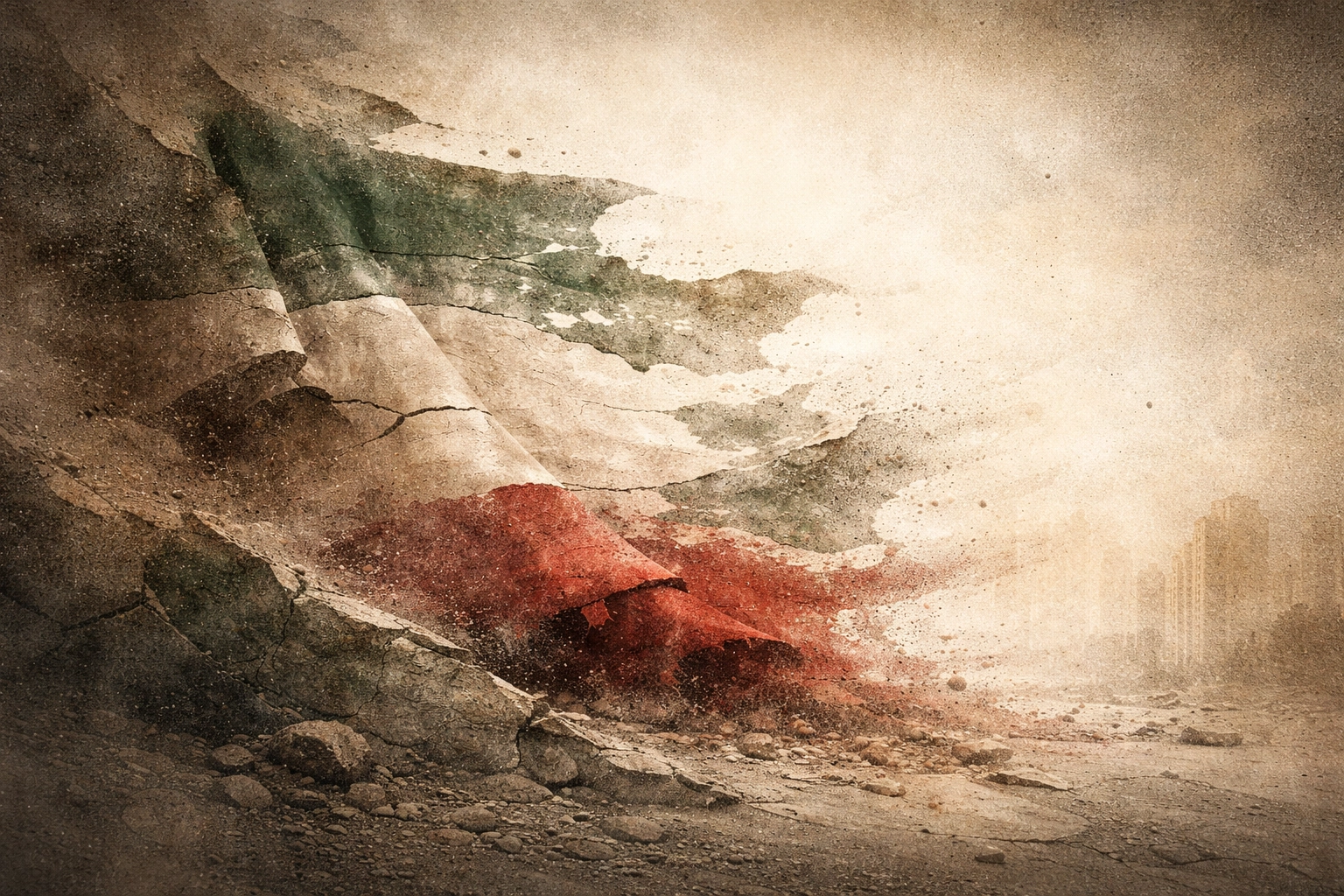
In 1979, Iran’s revolution was not presented as a leap into uncertainty. It was framed as a safeguard. Revolutionary leaders argued that the monarchy had failed to protect national dignity and social equity. The Islamic Republic claimed it would restore what had been lost.
More than four decades later, the central question confronting Iran is no longer ideological. It is institutional. What did the Islamic Republic say it would preserve — and what has systematically disappeared under its rule?
Personal Security Was Promised
Revolutionary leaders spoke of protecting ordinary Iranians from arbitrary power. The Shah’s security apparatus was portrayed as intrusive and brutal, a symbol of state violence divorced from public accountability. The Islamic Republic promised a moral state rooted in justice rather than coercion.
In practice, personal security became conditional. Surveillance expanded into daily life, dissent was criminalized, and legal protections narrowed. Protest movements — from students in 1999 to nationwide demonstrations in recent years — have repeatedly been met with force, detention, and lethal repression. Safety was not eliminated; it was rationed.
Economic Justice Was Promised
Economic fairness stood at the center of revolutionary rhetoric. Corruption, inequality, and elite capture were cited as moral failures of the monarchy. The new system pledged redistribution, dignity through work, and independence from foreign economic pressure.
Instead, Iran’s economy became increasingly centralized around state-linked institutions and security organizations. Sanctions intensified structural weaknesses, but internal governance amplified them. Inflation eroded purchasing power, unemployment persisted among the young, and access to opportunity became uneven.
National Dignity Was Promised
The Islamic Republic positioned itself as a defender of Iranian sovereignty. Independence from Western influence was framed as a restoration of national pride and self-determination.
Over time, this posture translated into isolation rather than empowerment. Diplomatic estrangement, recurring sanctions, and regional entanglements imposed material costs on daily life. Currency instability, travel restrictions, and limited global integration reshaped how Iranians engaged with the world.
Moral Order Was Promised
A central justification for clerical rule was moral stewardship. The state would guide society ethically, ensuring social cohesion and cultural authenticity.
This approach blurred the boundary between governance and enforcement. Cultural expression, personal choice, and social norms became matters of state interest. Authority relied on compliance rather than consent. Morality became compulsory.
Why Today’s Discontent Is About Rejection, Not Restoration
Current unrest in Iran is often mischaracterized as nostalgia. The record suggests otherwise. What unifies disparate protest movements is not consensus on an alternative system, but rejection of the present one.
Symbols from Iran’s pre-revolutionary past resurface not as blueprints, but as reference points — reminders that the current order was neither inevitable nor faithful to its original claims.
The Receipt That Remains Open
The Islamic Republic did not fail quietly. It replaced one concentration of power with another, one form of exclusion with a different logic, and one promise with an enduring gap between rhetoric and reality.
What remains unresolved is not whether Iranians want change, but what kind of legitimacy can still be claimed by a system that erased the very protections it said justified its existence.
The receipt remains unpaid.